
Strength and Conditioning for Youth Athletes
Youth athletes are in a crucial phase of physical and mental development. What they do now will shape their performance, injury risk, and confidence for years to come.
That’s why strength and conditioning training for youth athletes is so important—and misunderstood.
Some parents and coaches worry that resistance training might “stunt growth” or be unsafe. In reality, when done correctly, strength and conditioning improves athleticism, prevents injury, and creates the foundation for long-term success.
Why Strength and Conditioning Matters for Youth Athletes
Young athletes today are competing harder, earlier, and more often. Many play multiple sports or specialize too soon—both of which increase the risk of burnout and overuse injuries.
A well-designed strength and conditioning program:
-
Improves coordination and motor skills
-
Enhances speed, strength, and power
-
Teaches movement mechanics
-
Reduces injury risk
-
Builds mental toughness and confidence
In short: it helps young athletes move better, feel better, and play better.
Debunking the Myths About Youth Strength Training
There are still common myths that scare parents away from strength training:
Myth 1: “Strength training stunts growth.”
False. Numerous studies confirm that supervised resistance training does not negatively impact growth plates or development. In fact, it may improve bone density.
Myth 2: “They’re too young to lift weights.”
If a child is old enough to participate in organized sports, they’re old enough to start learning proper movement and strength basics.
Myth 3: “They should just play sports to get stronger.”
While playing sports develops skills, it does not teach foundational strength, balance, or mechanics. Strength and conditioning fills those gaps.
What Age Should Youth Athletes Start Training?
Most experts—including the National Strength and Conditioning Association (NSCA)—agree that youth athletes can begin training as early as 7–8 years old, provided:
-
They are emotionally ready to follow directions
-
Sessions are supervised by qualified professionals
-
The focus is on form and body control, not heavy lifting
Around age 12–14, athletes can safely progress to more structured and slightly loaded strength work.
Key Benefits of Strength and Conditioning for Youth Athletes
1. Improved Athletic Performance
Training helps youth athletes:
-
Sprint faster
-
Jump higher
-
Change direction more efficiently
-
Improve endurance and stamina
These gains transfer across all sports.
2. Injury Prevention
Strength training:
-
Improves joint stability
-
Builds stronger tendons and muscles
-
Corrects imbalances before they become problems
-
Reduces overuse injuries (like Osgood-Schlatter, Sever’s disease, and ACL tears)
3. Better Movement Mechanics
Good training teaches proper:
-
Squatting
-
Jumping and landing
-
Running technique
-
Core bracing
This reinforces safe and effective movement patterns for sport and life.
4. Confidence and Mental Development
Strength training boosts self-esteem. Kids who train consistently gain a sense of discipline, body awareness, and motivation that carries into their sport—and beyond.
What Should a Youth Strength and Conditioning Program Include?
Here’s what a well-rounded youth program looks like:
1. Movement Skill Development
Train foundational patterns:
-
Squats
-
Hinge (hip bend)
-
Push (e.g., push-ups)
-
Pull (e.g., rows)
-
Carries and lunges
2. Core Stability
Teach young athletes how to use their core:
-
Bird dogs
-
Dead bugs
-
Side planks
-
Crawling patterns
3. Speed and Agility
Youth athletes are in their prime window to learn speed:
-
Sprint mechanics drills
-
Lateral shuffles and cones
-
Acceleration starts
-
Quick feet ladder drills
4. Plyometrics and Coordination
Introduce low-level jumping and reaction work:
-
Jump rope
-
Hops and bounds
-
Skips and marches
-
Balance drills
5. Strength Training (Age-Appropriate)
For ages 12+, add light resistance:
-
Dumbbells, bands, or kettlebells
-
Emphasis on slow, controlled movement
-
Progress slowly as technique improves
Sample Training Session for a Youth Athlete (Age 10–13)
Warm-Up – 10 Minutes
-
High knees
-
Arm circles
-
Squat-to-stand
-
Skips
Skill Work – 10 Minutes
-
Ladder drills (in/out, lateral hops)
-
Wall sprint form (3×5)
Strength Circuit – 3 Rounds
-
Bodyweight squats – 10
-
Push-ups (from knees if needed) – 8
-
Glute bridges – 10
-
Bird dogs – 5/side
Core and Balance – 5 Minutes
-
Side plank – 20 sec/side
-
Single-leg balance reach – 5/leg
Cooldown – 5 Minutes
-
Walking lunges
-
Hamstring stretch
-
Deep breathing
This is all that’s needed to create a strong, capable athlete—without risking injury or overloading them too early.
Frequency Recommendations
-
Ages 8–11: 2 sessions/week focused on fundamentals
-
Ages 12–14: 2–3 sessions/week introducing resistance
-
High School: 3–4 sessions/week depending on sport and season
Always balance strength work with sport practice, rest, and play.
Partnering with the Right Coaches
Youth training should always be:
-
Supervised
-
Safe and age-appropriate
-
Focused on fun, form, and consistency
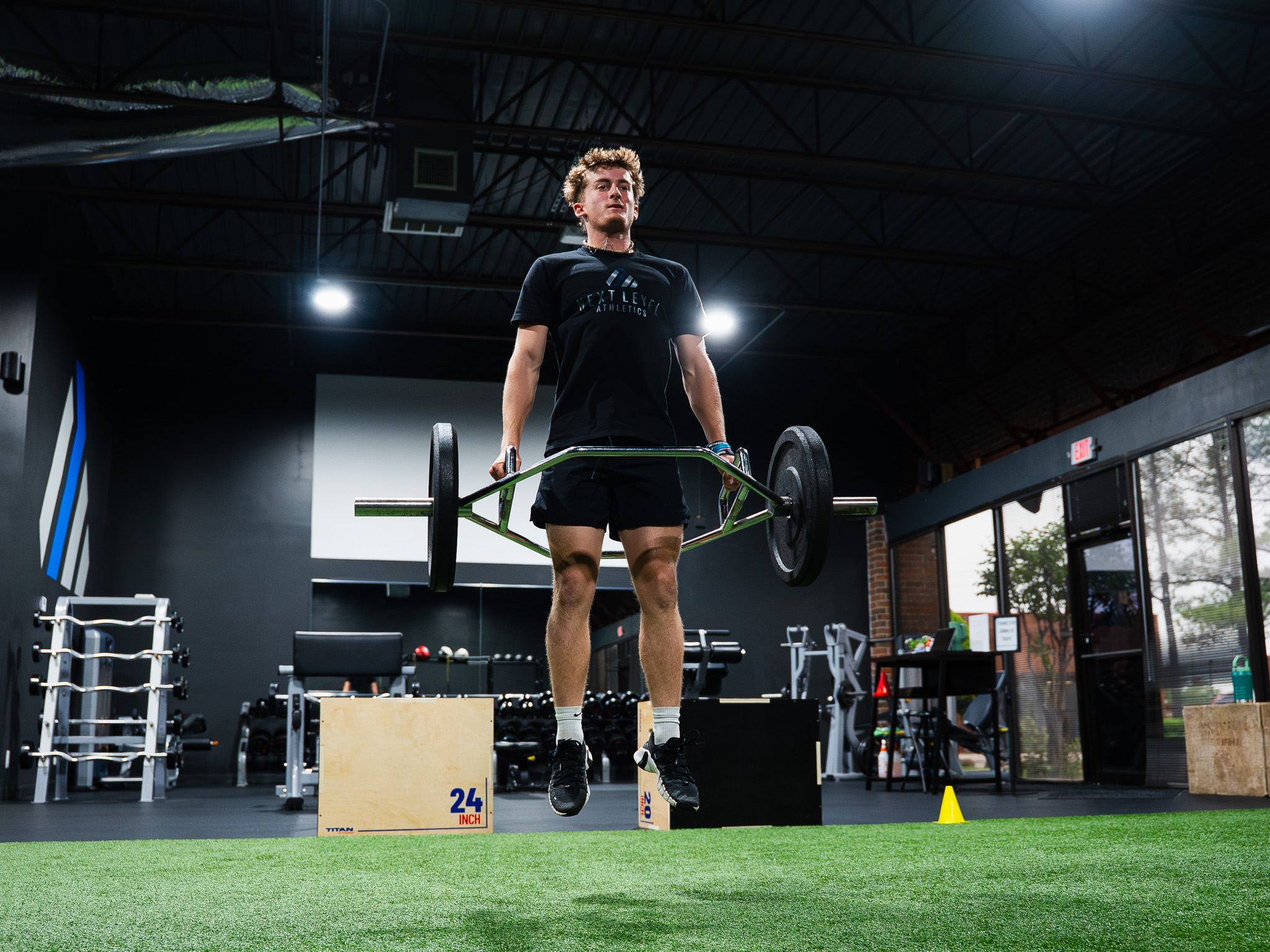
At Next Level Athletics, we specialize in training youth athletes with personalized programs that build physical literacy, athleticism, and self-confidence.
Our sessions prioritize safety, long-term development, and fun—so kids learn to love training, not fear it.
Final Thoughts
Strength and conditioning for youth athletes isn’t about lifting heavy weights or pushing early specialization. It’s about helping young athletes:
-
Move better
-
Build strength safely
-
Prevent injury
-
Gain confidence
Start early. Build the base. Watch them grow into strong, skilled athletes with the tools to succeed long-term.
Recent Comments