
Strength and Conditioning for Injury Prevention
Injuries are the enemy of athletic progress. Whether it’s a sprained ankle, torn ACL, or nagging overuse issue, downtime from injury means lost development, confidence, and performance.
That’s where a smart strength and conditioning program makes a huge difference.
When designed correctly, strength and conditioning for injury prevention doesn’t just make athletes stronger—it makes them more resilient, more balanced, and more prepared for the demands of their sport.
Why Athletes Get Injured
Most sports injuries don’t happen from freak accidents—they result from:
-
Muscle imbalances
-
Poor movement patterns
-
Weak stabilizer muscles
-
Lack of mobility or flexibility
-
Fatigue and poor recovery
Many of these are preventable with proper strength and conditioning training.
The Role of Strength and Conditioning in Injury Prevention
Here’s how it works:
1. Improves Muscular Balance
Strength training addresses weaknesses and asymmetries, especially between:
-
Hamstrings vs. quadriceps
-
Left vs. right limbs
-
Core vs. extremities
Balanced strength reduces the chance of overloading one muscle group or joint.
2. Enhances Joint Stability
Stronger muscles provide better support for joints. This reduces stress on:
-
Knees
-
Shoulders
-
Ankles
-
Hips
Training stabilizers like the glutes, rotator cuff, and deep core prevents joint instability and injury.
3. Builds Better Movement Mechanics
Strength and conditioning coaches teach athletes how to:
-
Land correctly
-
Cut and decelerate safely
-
Sprint with proper posture
-
Maintain good form under fatigue
These movement habits are key to long-term injury prevention.
4. Increases Bone Density and Tendon Strength
Resistance training doesn’t just impact muscles—it makes bones and tendons more resilient too. This is especially important for youth and female athletes at higher risk for overuse injuries.
Common Preventable Sports Injuries
Here are some of the most common injuries strength and conditioning can help prevent:
| Injury | How S&C Helps Prevent It |
|---|---|
| ACL Tear | Strengthens hamstrings, glutes, improves landing mechanics |
| Ankle Sprain | Enhances balance, proprioception, ankle strength |
| Rotator Cuff Injury | Builds shoulder stability and mobility |
| Lower Back Pain | Improves core strength, hip mobility |
| Shin Splints | Strengthens foot/ankle muscles, improves running technique |
| Hamstring Strain | Balances hamstring-to-quad ratio, increases eccentric control |
5 Key Areas to Target for Injury Prevention
An injury-prevention-focused strength and conditioning program should emphasize:
1. Core Strength
A strong core stabilizes the spine and transfers power effectively. Include:
-
Dead bugs
-
Bird dogs
-
Pallof presses
-
Anti-rotation holds
-
Weighted carries
2. Eccentric Training
Eccentric (lengthening phase) strength is key for deceleration and landing safely.
-
Nordic hamstring curls
-
Slow lowering in squats and lunges
-
Eccentric calf raises
3. Single-Leg Strength
Most sport movements are unilateral. Train:
-
Single-leg squats
-
Step-ups
-
Bulgarian split squats
-
Single-leg RDLs
4. Balance and Proprioception
Balance drills train the nervous system to react quickly and stabilize joints.
-
BOSU holds
-
Foam pad balance
-
Eyes-closed stability drills
-
Agility ladder with lateral movement
5. Mobility and Flexibility
Restricted mobility leads to compensations and overload. Prioritize:
-
Hip mobility drills
-
Shoulder range-of-motion exercises
-
Ankle dorsiflexion work
-
Foam rolling and dynamic warm-ups
Weekly Training Template for Injury Prevention
Here’s a sample 2-day split focused on injury reduction for high school or college athletes.
Day 1 – Lower Body Emphasis
-
Dynamic Warm-Up – 10 min
-
Bulgarian Split Squats – 3×8/leg
-
Eccentric Hamstring Curls – 3×6
-
Lateral Band Walks – 2×10 steps each way
-
Single-Leg Balance on BOSU – 3×30 sec
-
Core: Pallof Press – 3×10
-
Mobility Cooldown – 10 min
Day 2 – Upper Body + Core
-
Dynamic Warm-Up – 10 min
-
Push-Up with Reach – 3×10
-
TRX Rows – 3×10
-
Band External Rotations – 3×12
-
Plank to Side Plank Transitions – 3 rounds
-
Farmer Carries – 3×20 yds
-
Foam Roll and Stretch – 10 min
The Importance of In-Season Maintenance
Many athletes stop strength and conditioning once their competitive season begins—and injuries spike.
In-season programs should be:
-
Lower volume
-
Focused on maintaining strength
-
Targeting movement quality and joint integrity
Even 1–2 sessions a week can maintain progress and prevent breakdown.
Monitoring and Recovery: Part of the Plan
Even the best program can’t prevent injuries if athletes are under-recovered. Coaches and athletes should monitor:
-
Sleep
-
Hydration
-
Fatigue
-
Movement quality
When in doubt, back off. Rest is part of training.
Work with the Right Coaches
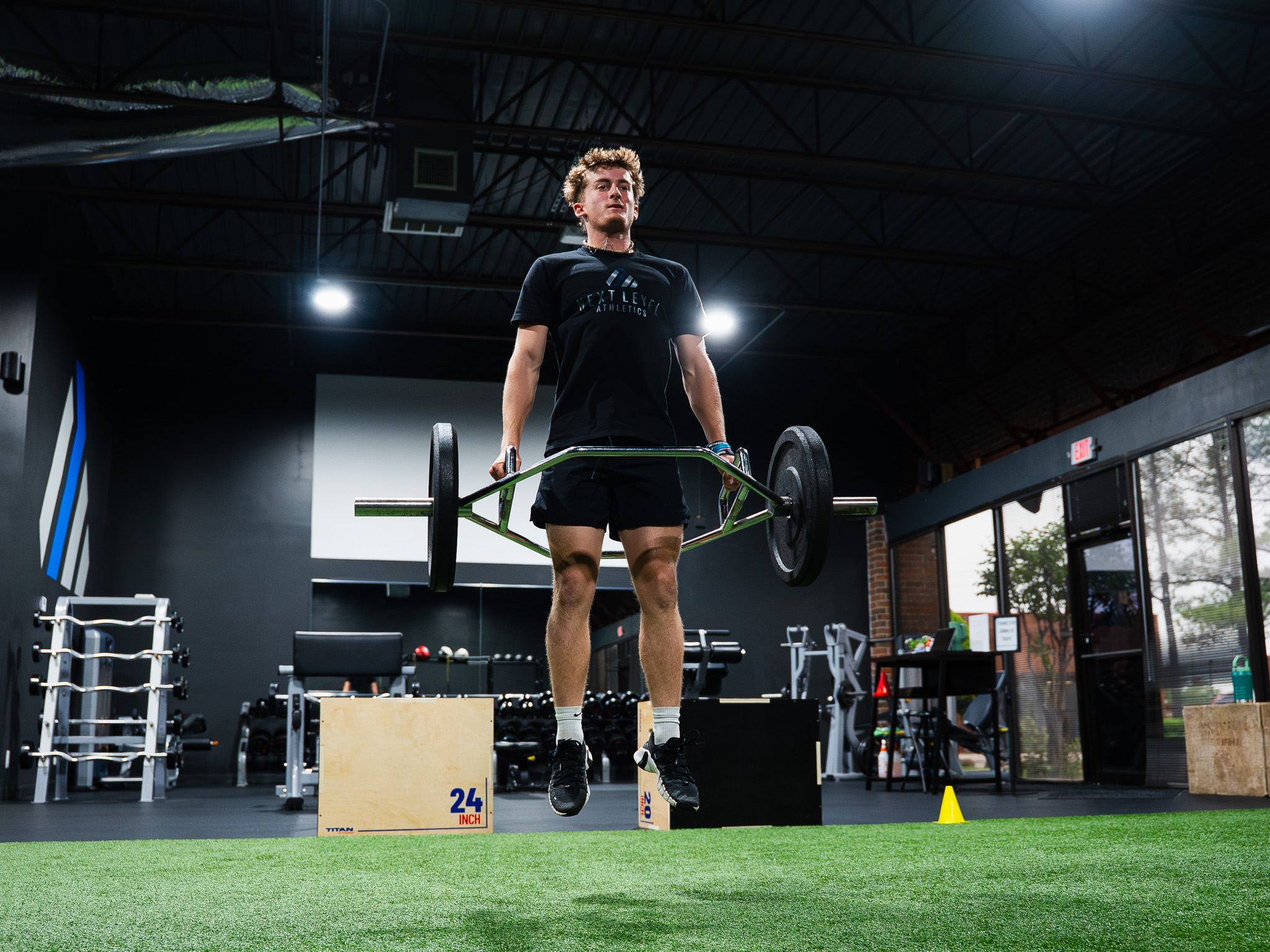
At Next Level Athletics, our strength and conditioning coaches understand that injury prevention starts with smart, individualized training.
We assess each athlete’s movement, mobility, and strength to build personalized plans that:
-
Correct imbalances
-
Reinforce safe mechanics
-
Improve resilience to sport stress
Our goal: keep athletes on the field, court, and track—not the sidelines.
Final Thoughts
Injury prevention isn’t about avoiding risk—it’s about preparing for it. A well-structured strength and conditioning training program builds a strong, stable, and balanced athlete ready for competition.
Don’t wait for injuries to happen. Prevent them with a plan built around strength, movement, and recovery.
Recent Comments